

Key takeaways
- Self-regulation is the ability to manage feelings, impulses and behaviour. Young children are still building it.
- Co-regulation is how adults lend children their calm until children can do it themselves.
- In the moment: stay calm, get down to your child’s level, lower the noise and light, and name the feeling.
- Teach calming strategies when your child is already calm, not in the middle of a meltdown.
- If big reactions are much more frequent or intense than other children’s, an occupational therapist can help.
You offer the blue cup and your child wanted the red one. You ask them to wait a minute, or to put their shoes on. Suddenly there’s screaming, crying, hitting or throwing. If this sounds familiar, you’re not alone, and your child isn’t being “naughty”.
Why do small things cause such big reactions?
Young children feel emotions just as strongly as adults do, but they don’t yet have the skills to understand and manage them. Those skills are called self-regulation: managing your feelings, your impulses and your behaviour so they fit the situation.
Self-regulation develops slowly, right through childhood and into the teenage years. Until it does, children rely on warm, responsive adults to help them make sense of what they’re feeling and to show them what to do next.
What is co-regulation?
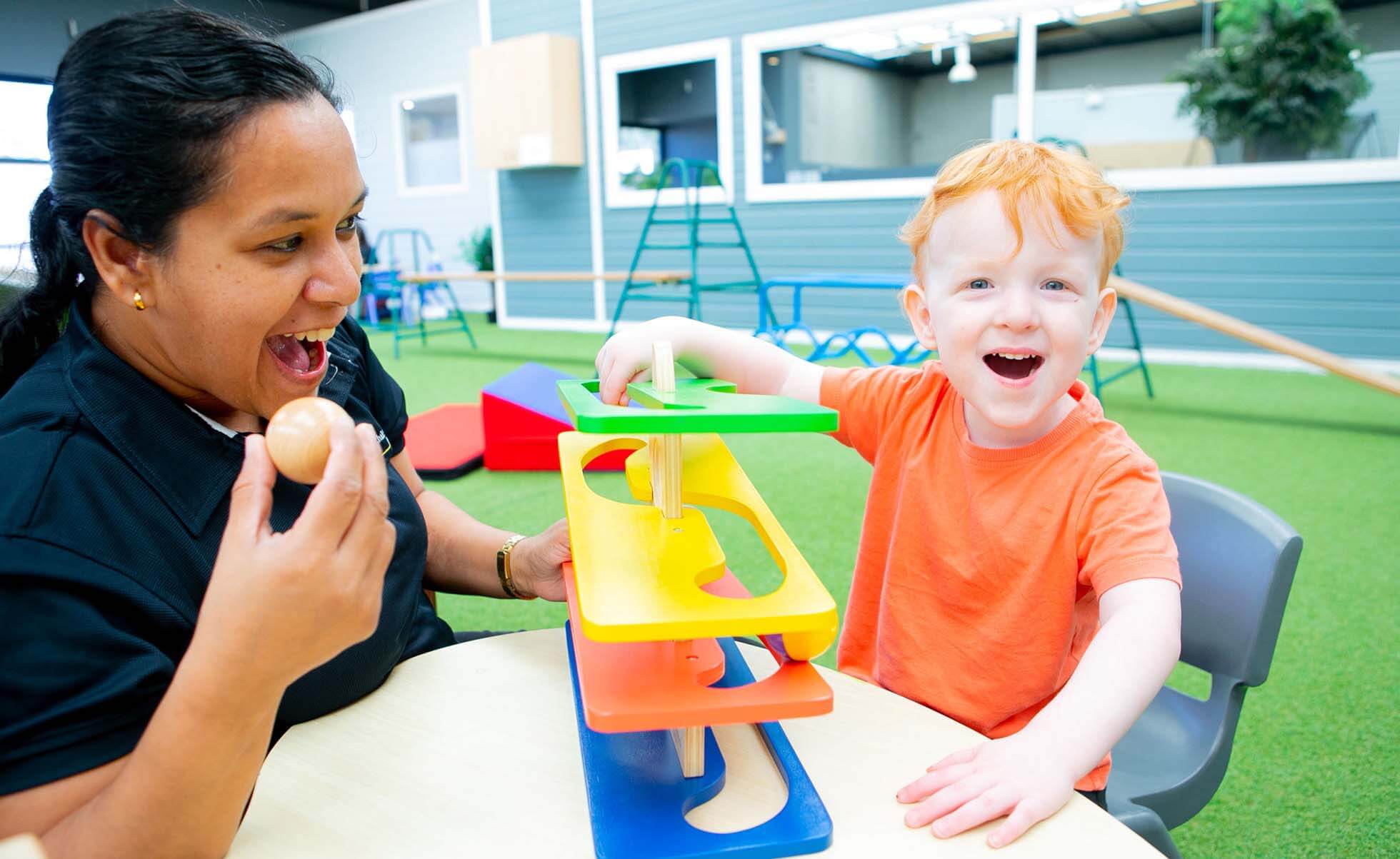
Co-regulation is the back-and-forth process where a calm, caring adult helps a child settle. You lend your child your calm: your steady voice, your slower breathing, your relaxed body. Over many repeats, your child learns to do this for themselves.
Co-regulation has three parts:
- A warm relationship. Your child knows you’re on their side, even when they’re upset.
- A supportive environment. Predictable routines and a calm space make big feelings less likely and easier to recover from.
- Teaching and coaching. You name feelings and show simple calming strategies, again and again.
What to do in the moment
- Stay calm yourself. Take a breath before you respond. Your child’s nervous system takes its cue from yours.
- Get down to your child’s level. Kneel or sit so you’re not standing over them.
- Give time and space. Some children want you close for comfort. Others need a little space. Stay nearby either way.
- Lower the stimulation. Turn off bright lights or the TV, put on quiet music, or move somewhere quieter.
- Name the feeling. “You’re really cross. You wanted the red cup.” Naming a feeling helps your child feel understood.
- Model simple words. Give your child words they can use next time, such as “stop”, “help” or “don’t want”.
Keep your words few and your voice low. A child in the middle of a big feeling can’t take in long explanations. Talk about what happened later, once everyone is calm.
Building self-regulation day to day
- Practise calming strategies when your child is calm. Try deep “balloon” breaths, a squeeze of a soft toy, a walk, or a quiet corner with cushions. Practised strategies are easier to reach for when feelings run high.
- Name your own feelings. “I’m feeling frustrated, so I’m going to take three big breaths.”
- Keep routines predictable. Warn your child before changes and use simple “first, then” language.
- Notice the wins. “You were so upset, and you took a big breath. That was hard, and you did it.”
- Look after yourself. Co-regulating is hard work. It’s easier when you’re rested and supported.
What to expect at different ages
| Age | What’s typical |
|---|---|
| Babies | Can’t really self-regulate yet. They rely on adults to soothe them. |
| Toddlers | Can wait a short time, but strong feelings often lead to tantrums. |
| Preschoolers | Start to play with others, follow simple expectations and work towards small goals, with lots of adult support. |
| School-age children | Get better at managing wants, following instructions and seeing other people’s points of view. |
Every child develops at their own pace. Children who feel emotions very intensely, or who have sensory differences, may need more co-regulation for longer.
When to seek support
Talk to your GP or an occupational therapist if:
- big reactions are much more frequent or intense than other children’s the same age
- your child’s behaviour is unsafe for them or others
- the strategies you’ve tried don’t seem to help
- big feelings are getting in the way of preschool, school or family life
Our occupational therapists in Northmead offer emotional regulation therapy for children across Western Sydney. We look at the sensory and body foundations behind big feelings, use the Zones of Regulation framework many local schools use, and coach parents in co-regulation so the strategies carry over at home. You don’t need a referral to book an OT assessment. We support NDIS self-managed and plan-managed families; see our funding options or contact our Northmead team.
Frequently asked questions
What is the difference between self-regulation and co-regulation?
Self-regulation is a child managing their own feelings and behaviour. Co-regulation is an adult helping them do it, by staying calm, naming feelings and showing strategies. Co-regulation comes first and builds self-regulation over time.
At what age can children self-regulate?
Self-regulation develops gradually through childhood and the teenage years. Toddlers and preschoolers still need a lot of adult help, and it’s normal for school-age children to need support at times.
Should I give my child space during a meltdown?
It depends on your child. Some want you close; others calm faster with a little space. Stay nearby, keep them safe, and keep your words few and calm.
Can an occupational therapist help with emotional regulation?
Yes. An OT looks at what’s behind your child’s big reactions, including sensory needs, and teaches practical strategies for home, preschool and school. Parents are coached too.
References
- Raising Children Network. Self-regulation in children and teenagers.
- Rosanbalm, K. D., & Murray, D. W. (2017). Caregiver co-regulation across development: A practice brief (OPRE Brief 2017-80). US Administration for Children and Families.
Related reading: Emotional Regulation Therapy · Supporting Transitions · Sensory Processing · Occupational Therapy