

You’re part of the team
We set goals together, explain progress in clear, jargon-free language and give you practical strategies for home.
Speech therapy and occupational therapy that help primary school children build confidence, connection and everyday skills, at school, at home and with friends. Based at our Northmead clinic.
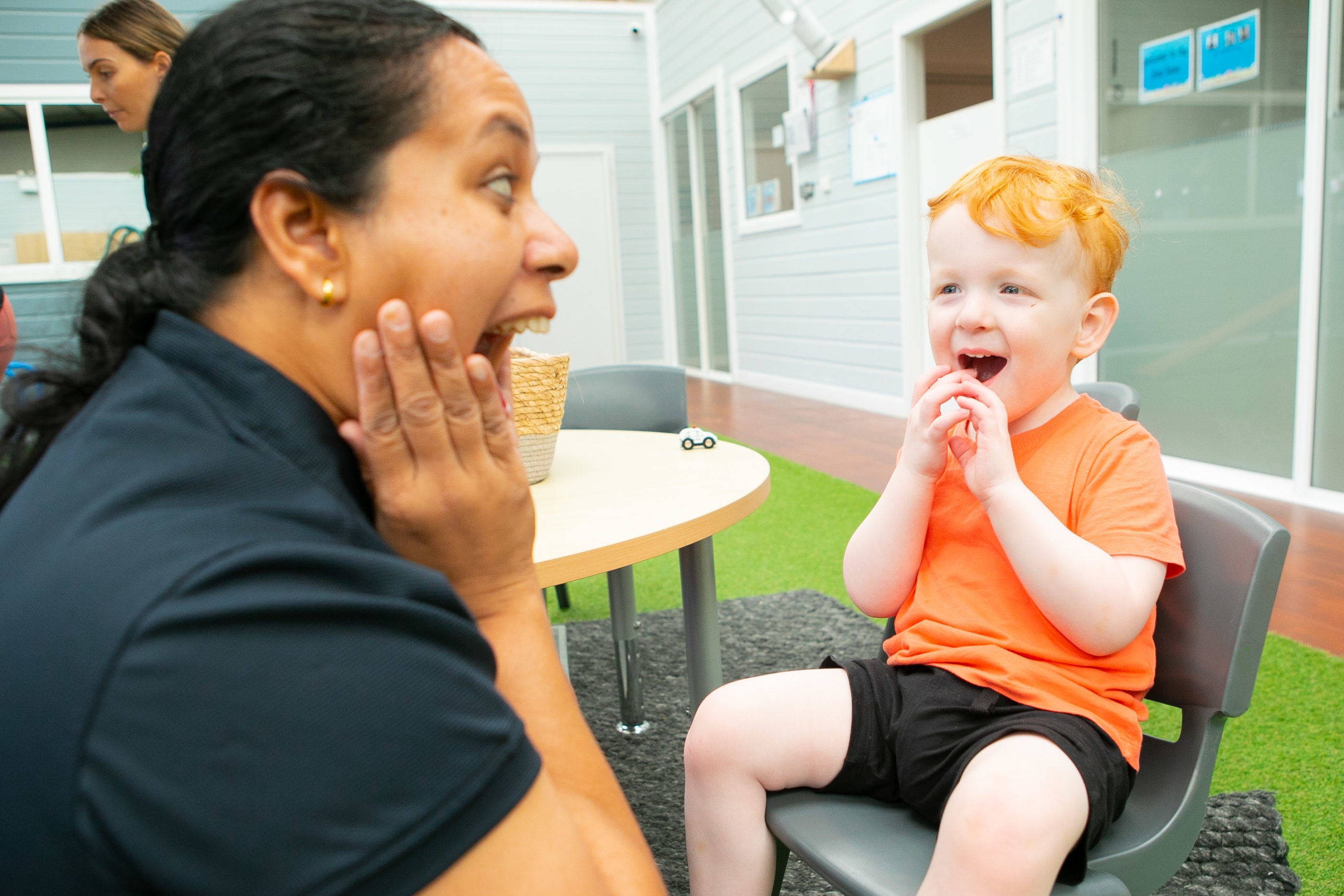
The school years bring new demands: following multi-step instructions in class, keeping up with handwriting, managing friendships and juggling after-school activities. Our speech pathologists and occupational therapists work alongside your child to build the skills they need to thrive.
We work closely with you and, with your consent, the other people involved in your child’s care, so everyone is working towards the same goals.
Our speech pathologists and occupational therapists support school-aged children with:
We also support children who don’t have a formal diagnosis but would benefit from extra help with communication, coordination or everyday skills.
Some common reasons families of school-aged children get in touch. If something doesn’t feel right, trust your instincts.
Finding it hard to follow instructions, stay organised or keep up with the pace of the day.
Handwriting that’s slow, messy or tiring, or difficulties with reading, spelling or written work.
Unclear speech, stuttering, or trouble explaining ideas and retelling what happened.
Finding friendships, group play or big feelings harder than other children their age.
Not sure? Give us a call on (02) 9037 1163 and we can talk it through.
We work with families, and with your consent the people around your child, so skills carry over to school and home.
We set goals together, explain progress in clear, jargon-free language and give you practical strategies for home.
With your consent, we can share strategies and progress with your child’s teacher, so support is consistent across the day.
Small groups where children practise communication and social skills with peers. See our school holiday social groups.
What families of primary school children often ask us. Can’t see yours? Call us on (02) 9037 1163.
Yes. Our speech pathologists and occupational therapists work on the underlying skills that affect school life, such as understanding and using language, handwriting, attention, organisation, sensory needs and emotional regulation. We set goals that matter in the classroom and at home.
Yes, with your consent. We can share strategies and progress updates with your child’s teacher so everyone is working towards the same goals. Talk to your clinician about what would be most helpful.
No. Many of the children we see don’t have a diagnosis. If you’ve noticed something about how your child communicates, plays, moves or manages their feelings, that’s reason enough to get in touch. Our clinicians can help you understand your child’s strengths and needs.
Sessions are usually 45 minutes. How often your child comes depends on their goals, and your clinician will talk through a plan with you after the initial assessment.
The Bridge Effect supports NDIS self-managed and plan-managed families. Medicare rebates may be available with a GP referral under a GP Chronic Condition Management Plan, and many private health extras policies cover speech pathology and occupational therapy. Our funding options page explains each one.
Speech therapy and occupational therapy under one roof, so your child’s goals are joined up across both.
Support with language for learning, speech clarity, stuttering, social communication and AAC.
Support with handwriting, sensory processing, emotional regulation, attention and everyday independence.
How NDIS (self-managed and plan-managed), Medicare and private health insurance can help with the cost of therapy.
Also see our pages for early childhood (0–6), teenagers (13–16) and parents and caregivers, or the suburbs we serve.
Whether you’ve just noticed something or you already know what your child needs, we’re here to help your family take the next step.
Send an enquiry or call us with a little about your child and what you’re hoping for.
We’ll match your child with the right speech pathologist or occupational therapist.
Your child’s initial assessment takes place at our Northmead clinic.