

Early childhood
First words, play, movement and getting ready for school. Early childhood support.
You’re the heart of your child’s development. We work in close partnership with families, offering guidance, support and practical strategies that help you feel confident and connected throughout your child’s therapy.
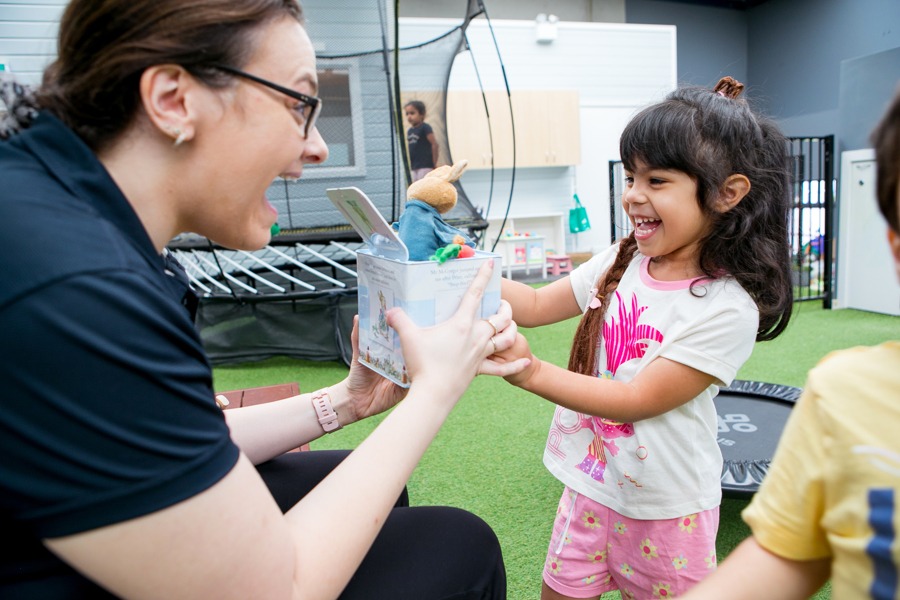
Therapy doesn’t just happen in the clinic. It happens in the everyday moments you share with your child. That’s why we focus on practical, play-based strategies you can use at home, in the community and at school.
We proudly serve the diverse communities of Western Sydney. Every family brings its own values, culture and experiences, and we tailor our support to fit your family, because therapy works best when it reflects who you are.
Alongside your child’s therapy, our speech pathologists and occupational therapists support you with:
Want more ideas between sessions? Browse our blog for practical tips from our clinicians.
From your first call to ongoing sessions, here’s how we work with you.
Tell us a little about your child and what you’ve noticed. Our client care team will answer your questions and explain your options.
Your clinician gets to know your child through conversation, play and observation, and listens to your concerns.
We agree on goals that matter to your family and explain the plan in clear, jargon-free language.
Regular sessions, strategies for home and progress updates, adapting as your child grows.
As your child grows, your needs as a parent or caregiver change too. We’re here for the long haul.
First words, play, movement and getting ready for school. Early childhood support.
Learning, handwriting, friendships and managing feelings at school. School-age support.
Communication, independence and wellbeing through high school. Teen support.
What parents and caregivers often ask us. Can’t see yours? Call us on (02) 9037 1163.
Yes. Parents and caregivers are encouraged to be part of therapy. Depending on your child’s age and goals, you might join in, watch, or catch up with the clinician at the end of the session. Either way, you’ll leave with strategies you can use at home.
Trust your instincts. If you’ve noticed something about how your child communicates, plays, moves, learns or manages their feelings, it’s worth a chat. You don’t need a diagnosis to get in touch, and our team can help you work out next steps.
No. You can book with us directly. A GP referral is only needed if you’d like to claim a Medicare rebate, and NDIS self-managed and plan-managed families don’t need one to use their plan. See our funding options for more.
Your clinician will share simple, practical strategies that fit into your everyday routines, like play, mealtimes, bath time and getting ready in the morning. Small moments of practice at home make a big difference.
The Bridge Effect supports NDIS self-managed and plan-managed families. Medicare rebates may be available with a GP referral under a GP Chronic Condition Management Plan, and many private health extras policies cover speech pathology and occupational therapy. Our funding options page explains each one.
Speech therapy and occupational therapy under one roof, so your child’s goals are joined up across both.
Support with talking, understanding, speech sounds, social communication and AAC for children and teens up to 16.
Support with sensory processing, fine motor skills, self-care, emotional regulation and school readiness.
How NDIS (self-managed and plan-managed), Medicare and private health insurance can help with the cost of therapy.
Also see our pages for early childhood (0–6), school-aged children (7–12) and teenagers (13–16), or the suburbs we serve.
Whether you’re new to therapy or have been on this journey for a while, we’re here to help you feel supported, heard and empowered.
Send an enquiry or call us with a little about your child and what you’re hoping for.
We’ll match your child with the right speech pathologist or occupational therapist.
Your child’s initial assessment takes place at our Northmead clinic.