


Key takeaways
- Children learn by exploring with all their senses: touch, sight, sound, smell, taste and movement.
- Sensory play builds hand skills, language, problem-solving and calm focus.
- Simple materials work best: water, sand, playdough, rice, shaving foam.
- Join in, copy your child, then add a new idea to stretch the play.
- Some children avoid mess. Start small, offer tools, and never force it.
Young children learn and develop when they can explore the world in a safe, supportive space, and when they’re interested and having fun. Sensory play is one of the easiest ways to make that happen at home, using things you probably already have.
Why does sensory play matter?
When children squish, pour, scoop and splash, they’re doing more than making a mess. Sensory play helps children:
- build hand strength and fine motor skills (pinching, scooping, pouring)
- learn new words (“squishy”, “cold”, “full”, “empty”)
- practise problem-solving and cause and effect
- stay focused, and for many children, feel calm
- play alongside and with other people
6 hands-on sensory play ideas
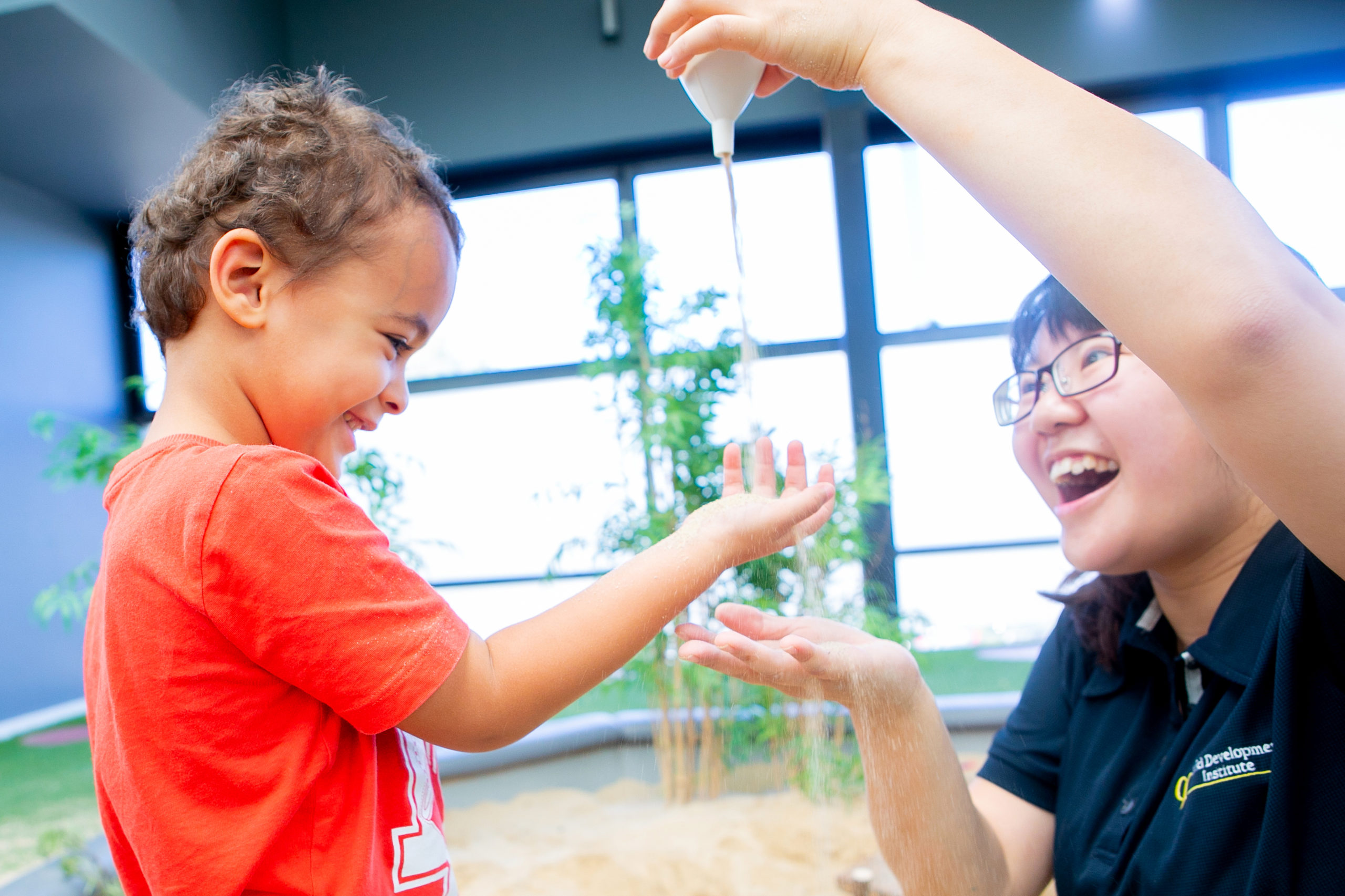
- Sand and water play. Scoop, pour, fill and empty with cups, spoons and funnels.
- Playdough or clay. Squish, roll, poke and cut. Great for hand strength.
- Sensory or discovery bottles. Fill a sealed plastic bottle with water, sand or rice and small trinkets to shake and watch.
- Frozen animal rescue. Freeze small toy animals in water and let your child free them with warm water and a spoon.
- Shaving foam. Spread it on a tray or the bath wall to draw, smoosh and squish.
- Rice and pasta tubs. Hide toys to find, or scoop and pour between containers.
6 social sensory ideas
These activities mix sensory input with back-and-forth fun with you:
- Reading books together, especially touch-and-feel or lift-the-flap books
- Singing songs with actions
- Finger-play songs and rhymes
- Puppet play
- Trampoline bouncing, counting the bounces together
- Therapy ball games: rocking, rolling or bouncing your child on a large ball, with you holding them
How to make play more engaging
- Join in and copy. Do what your child is doing, alongside them.
- Repeat, then change one thing. Once a game is familiar, add a twist: a new tool, a new colour, hiding a toy. Children learn by watching you play in new ways and then trying it.
- Add words. Describe what you both feel and see: “Cold water!” “Squish!” “All gone!”
- Follow your child’s lead. Let them choose the activity and how long to stay with it.
If your child avoids messy play
Some children find certain textures uncomfortable. That’s okay. Try:
- starting with dry materials (rice, pasta) before wet or sticky ones
- offering tools (spoons, cups, paintbrushes) so they don’t have to touch
- putting materials in a sealed zip-lock bag to squish from outside
- having a cloth and water nearby to wipe hands
- letting them watch you play first
Never force a child to touch something. Go at their pace.
Safety
- Always supervise sensory play.
- Small items like rice, dried pasta, beads and trinkets can be choking hazards for children under 3. Use larger items, or seal them in bottles or bags.
- Glue or tape bottle lids closed.
- Check for allergies (for example, wheat in playdough) and skin sensitivity to shaving foam.
When to seek support
Talk to an occupational therapist if your child:
- is very distressed by many textures, sounds or movements, even after slow practice
- constantly seeks intense movement or touch in a way that isn’t safe
- avoids play that uses their hands
- finds it hard to stay with any activity
Our occupational therapists in Northmead support children with sensory processing differences and fine motor skills across Western Sydney, using play-based sessions and parent coaching. We support NDIS self-managed and plan-managed families; see our funding options or contact our Northmead team.
Frequently asked questions
What is sensory play?
Sensory play is any activity that lets children explore with their senses: touching, pouring, smelling, listening, looking and moving. Sand, water, playdough and bubbles are classic examples.
What are the benefits of sensory play?
It builds hand strength and fine motor skills, new words, problem-solving and focus. Many children also find it calming.
Is sensory play safe for toddlers?
Yes, with supervision. Avoid small items for children under 3, or seal them inside bottles or bags, and check for allergies.
What if my child hates getting their hands messy?
Start with dry materials, offer tools, or use a sealed bag. Never force touch. If textures cause a lot of distress, an OT can help.
References
- Raising Children Network. Sensory play activities for children.
Updated from an earlier article by Sarah McInnes, Early Childhood Teacher.
Related reading: Finding your child’s smile during play · 5 OT-Approved Play Activities · Sensory Processing · Occupational Therapy