


Key takeaways
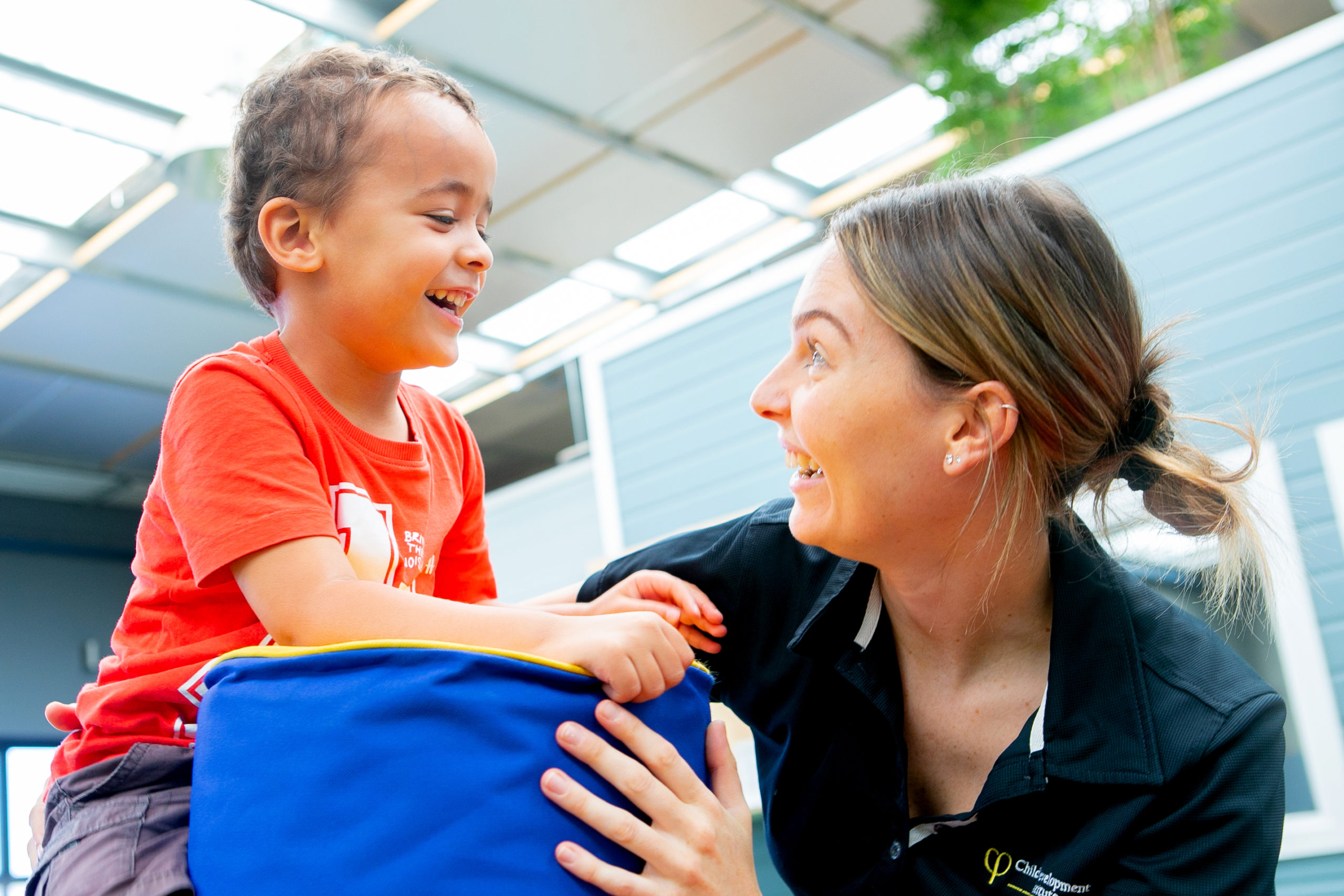
- Shared smiles and laughter during play are how children connect, and they make learning easier.
- Get face to face, so your child can see your expressions.
- Mix toy play with “people play”: tickles, chasing, bouncing and songs.
- Cut distractions: a calm space, a few toys, the TV off.
- Follow your child’s lead and notice what makes them light up.
One of the best things in the world is seeing your child smile. But sometimes it’s hard to find, or it only shows up at certain times. Here are some simple ways to bring out more smiles, and more connection, during play.
Why do shared smiles matter?
When you and your child enjoy something together, you’re both paying attention to the same thing at the same time. These shared moments are where a lot of learning happens: looking, copying, taking turns and, later, talking. A child who is enjoying themselves is also calmer and more ready to learn.
Step 1: Get face to face
- Get down to your child’s level. Sit on the floor, lie on your tummy, or hold a toy near your face so your child can see your expressions.
- Be lively. Use big facial expressions, a playful voice and fun sound effects.
- Talk about what’s happening. Comment simply on what your child is doing: “Up, up, up!” “Big tower!”
- Pause and wait. Stop partway through a game and wait for your child to ask for more, with a look, a sound or a movement. Then carry on straight away.
Step 2: Set up the space
- Find a calm, quiet spot. Bring a few activities to a room with less noise and fewer people.
- Limit the toys. Too many choices can be distracting. Put out a few and keep the rest out of sight.
- Turn off the TV and screens. Background noise makes it harder for your child to focus on you.
Step 3: Follow your child’s lead
- Notice what your child loves. Some children light up with movement (spinning, bouncing, swinging), others with bubbles, songs, building or messy play. Learning your child’s likes and dislikes, including sensory preferences, tells you where the smiles are.
- Offer two choices. Hold up two toys or activities and see which one your child reaches for or looks at.
- Mix toy play and people play. Swap between a toy activity (Lego, puzzles, dolls, a ring stacker) and a social game (Ring a Ring o’ Roses, spinning, a trampoline bounce). Switching keeps your child motivated and their energy at a good level for learning.
When to seek support
Every child connects in their own way. Talk to an occupational therapist or speech pathologist if your child:
- rarely smiles at you, looks at you or shares enjoyment during play
- seems uninterested in people play, or very upset by touch, noise or movement
- has trouble staying with any activity for more than a few moments
- has lost skills they used to have
Our occupational therapists in Northmead use play to build connection, attention and everyday skills, and can help you understand your child’s sensory preferences. Our speech pathologists support autistic and neurodivergent children to connect and communicate in their own way. We support NDIS self-managed and plan-managed families; see our funding options or contact our Northmead team.
Frequently asked questions
How can I get my child more engaged in play?
Get face to face, cut distractions, use a lively voice and follow what your child enjoys. Pausing partway through a game gives your child a chance to ask for more.
What is “people play”?
People play is play where you are the toy: tickles, chasing, peekaboo, bouncing or action songs. It’s a great way to share enjoyment and practise looking and turn-taking.
What does “follow your child’s lead” mean?
Join in with what your child is already interested in, instead of choosing the activity for them. Children stay engaged longer when the play is about something they love.
My child doesn’t seem to enjoy playing with me. Should I worry?
Every child is different, and some take longer to warm up to people play. If your child rarely shares smiles or attention with you, talk to an OT or speech pathologist.
References
- Raising Children Network. Autistic children: paying attention.
- Raising Children Network. Play ideas for toddler language and talking.
Updated from an earlier article by Nicola Hayes.
Related reading: Sensory play · Imitation through song · 5 OT-Approved Play Activities · Occupational Therapy